Some website projects begin with a few-page mockups and a simple sitemap.
This one began with 62 plugins, multiple overlapping systems, and a structure that had evolved organically over years.
The redesign of the Home Ground Habitats website in Novato, California, became one of the most ambitious and expansive projects I’ve worked on in recent years—a full-scale nonprofit website redesign, UX strategy, and WordPress platform rebuild.
Led by Artenergy, a Kentfield-based digital studio in Marin County, this project evolved far beyond a traditional redesign.
It became a complete rethinking of how an environmental education organization could function as a digital ecosystem.
The final platform launched on May 6, 2026.
But the real work began months earlier.
Winning the Project Through Strategy
The first step was not design.
It was a strategy.
In September 2025, Home Ground Habitats invited several firms to participate in a structured evaluation process. Before proposals were discussed, each team was asked to deliver a full website audit and strategic assessment.
On September 29, 2025, I submitted a seven-page document titled:
“Website Assessment and Strategic Recommendations”
The audit evaluated user experience, information architecture, content hierarchy, technical performance, and long-term scalability.
At the time, the WordPress website included 62 active plugins, multiple themes, dozens of primary pages, and more than 100 blog posts, events, and educational resources.
The issue was not a lack of content—it was a lack of structure.
Valuable information existed throughout the site, but users were not being guided through it effectively.
The proposal reframed the website as an educational platform rather than a traditional nonprofit website. That strategic shift became a key factor in winning the project.
The challenge was not visual design.
The challenge was clarity, structure, and guided discovery.
Designing a Living Ecosystem
Home Ground Habitats is not a typical nonprofit organization.
Based in Novato, Marin County, it operates at the intersection of habitat restoration, native plant education, ecological design, and community engagement.
The website needed to reflect that complexity without overwhelming users.
The solution was to treat the platform as a living digital ecosystem—one that supports exploration, learning, and participation.
The UX strategy focused on:
- Narrative flow and progressive disclosure of information
- Clear pathways between education, action, and engagement
- Reduced cognitive load through structured content layers
- Strong but natural calls to action
- Visual rhythm to guide attention and pacing
Instead of presenting information as static pages, the experience was designed to unfold gradually—helping users move from curiosity to deeper understanding.
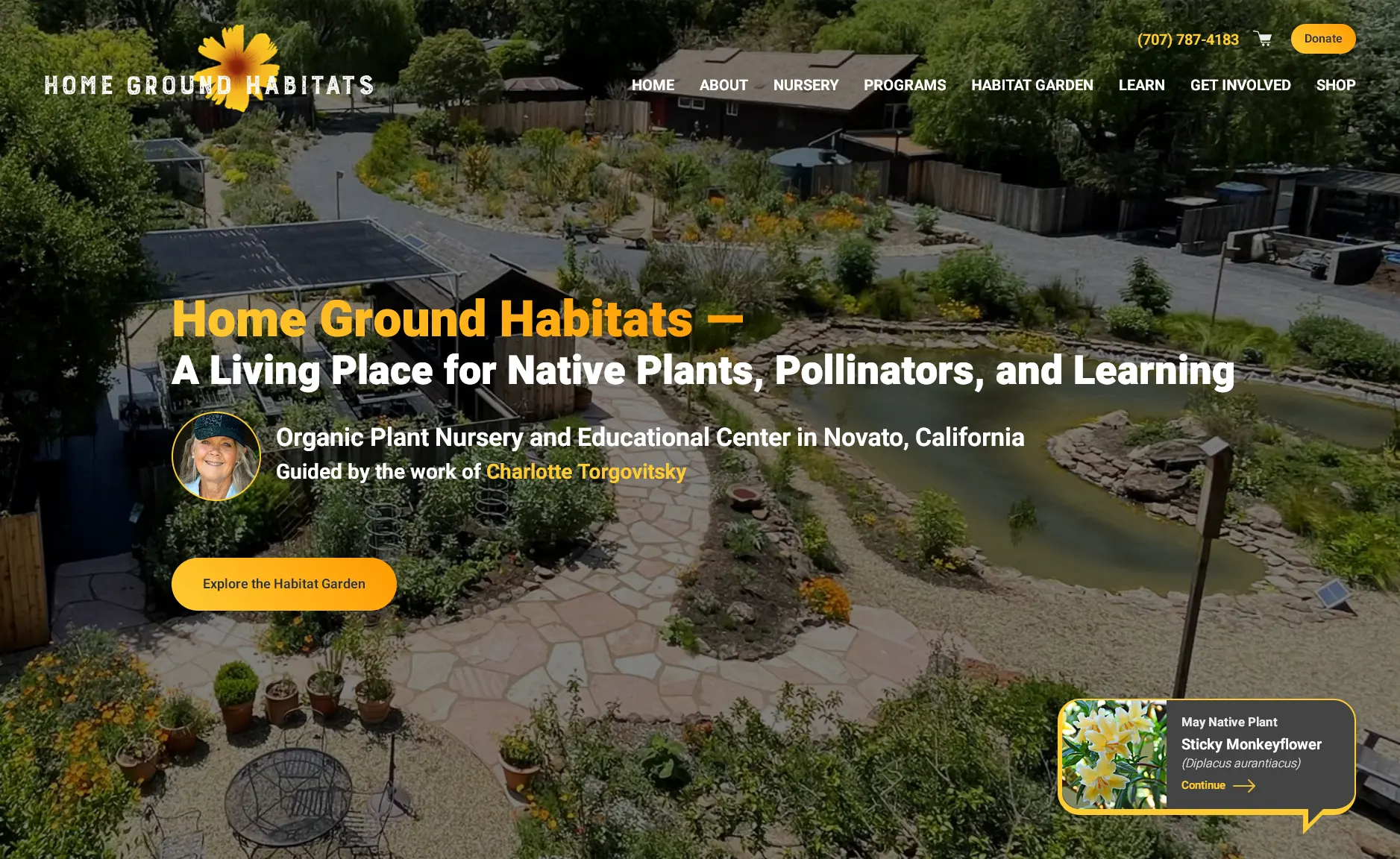
Homepage design for the Home Ground Habitats website.
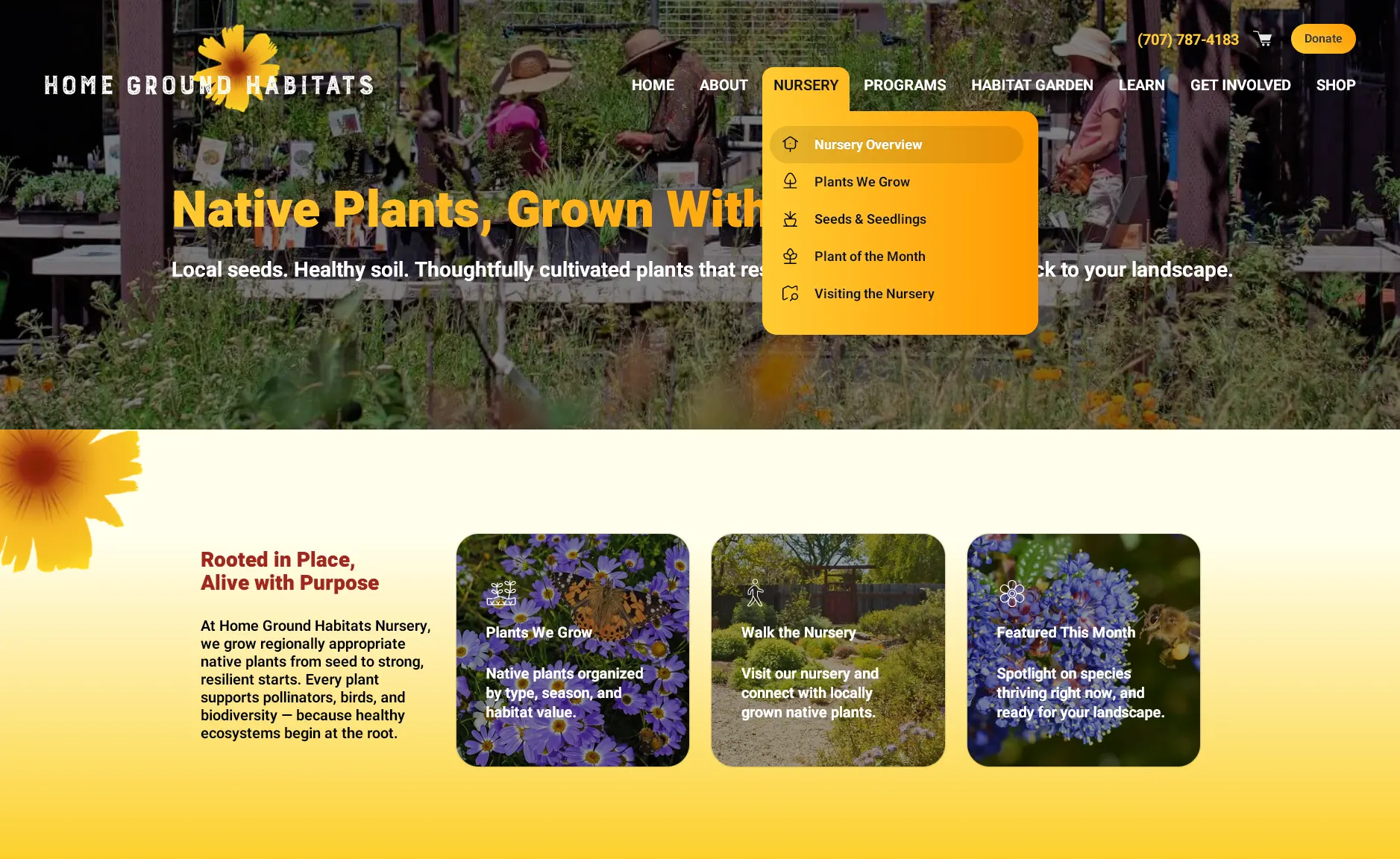
Nursery page, hero and the main section.
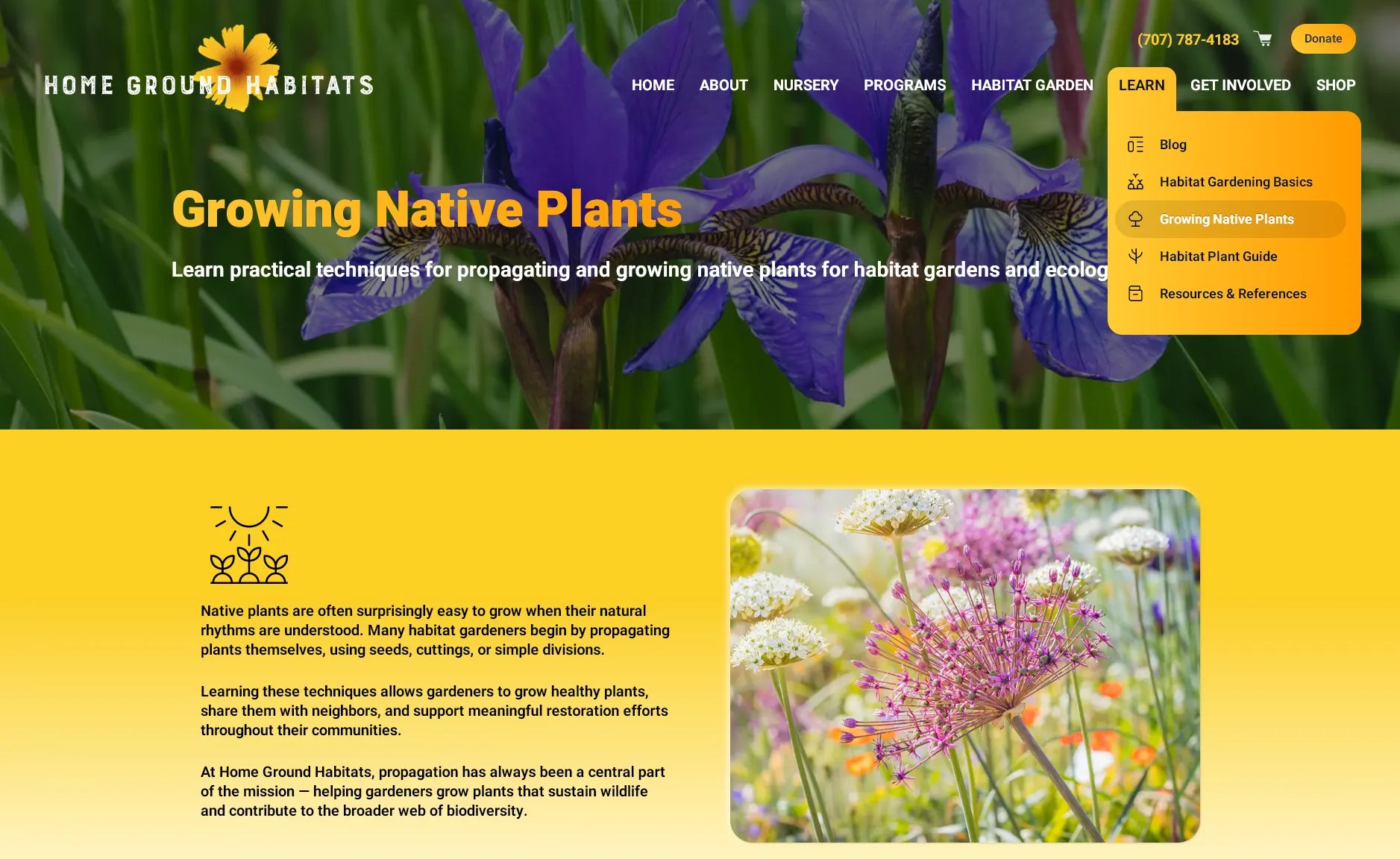
Learn, landing page with open dropdown menu.
Expanding Beyond the Original Scope
In January 2026, a second strategic document was delivered:
“Creating a digital home that reflects the mission, knowledge, and beauty of the sanctuary.”
This proposal outlined multiple directions, including a broader “Legacy Learning Platform” concept.
Once development began, the scope expanded significantly.
Deeper analysis revealed interconnected systems across educational content, workshops, native plant data, volunteer programs, seasonal events, donations, and e-commerce.
Each layer required thoughtful integration into a unified structure.
What began as a website redesign evolved into a custom WordPress platform designed to support long-term growth, education, and community engagement.
AI as a Creative and Technical Multiplier
AI-assisted workflows played a meaningful role throughout the project.
While all strategic direction, UX decisions, and design systems remained human-driven, AI tools were used to accelerate iteration and problem-solving.
Working alongside ChatGPT helped:
- Improving the navigation structures
- Organize complex educational content systems
- Refine messaging and microcopy
- Explore multiple UX approaches efficiently
- Resolve development and implementation questions faster
For example, multiple models for structuring educational resources were tested before arriving at a layered navigation system that improved discoverability without increasing complexity.
AI did not replace design thinking—it expanded the speed and range of exploration.
Prototype and Experience Design
The first HTML prototype was completed on February 20, 2026.
From the beginning, the experience was designed to feel calm, immersive, and narrative-driven.
The homepage followed a deliberate progression:
emotion → clarity → depth → rest → discovery → invitation
This structure helped guide users through complex ecological topics without overwhelming them.
A key strategic decision was to avoid an ego-centered structure. Instead of building the experience around a single personality, the site presents expertise through educational content, habitat knowledge, and practical resources.
The result is a platform that feels mission-driven rather than personality-driven.
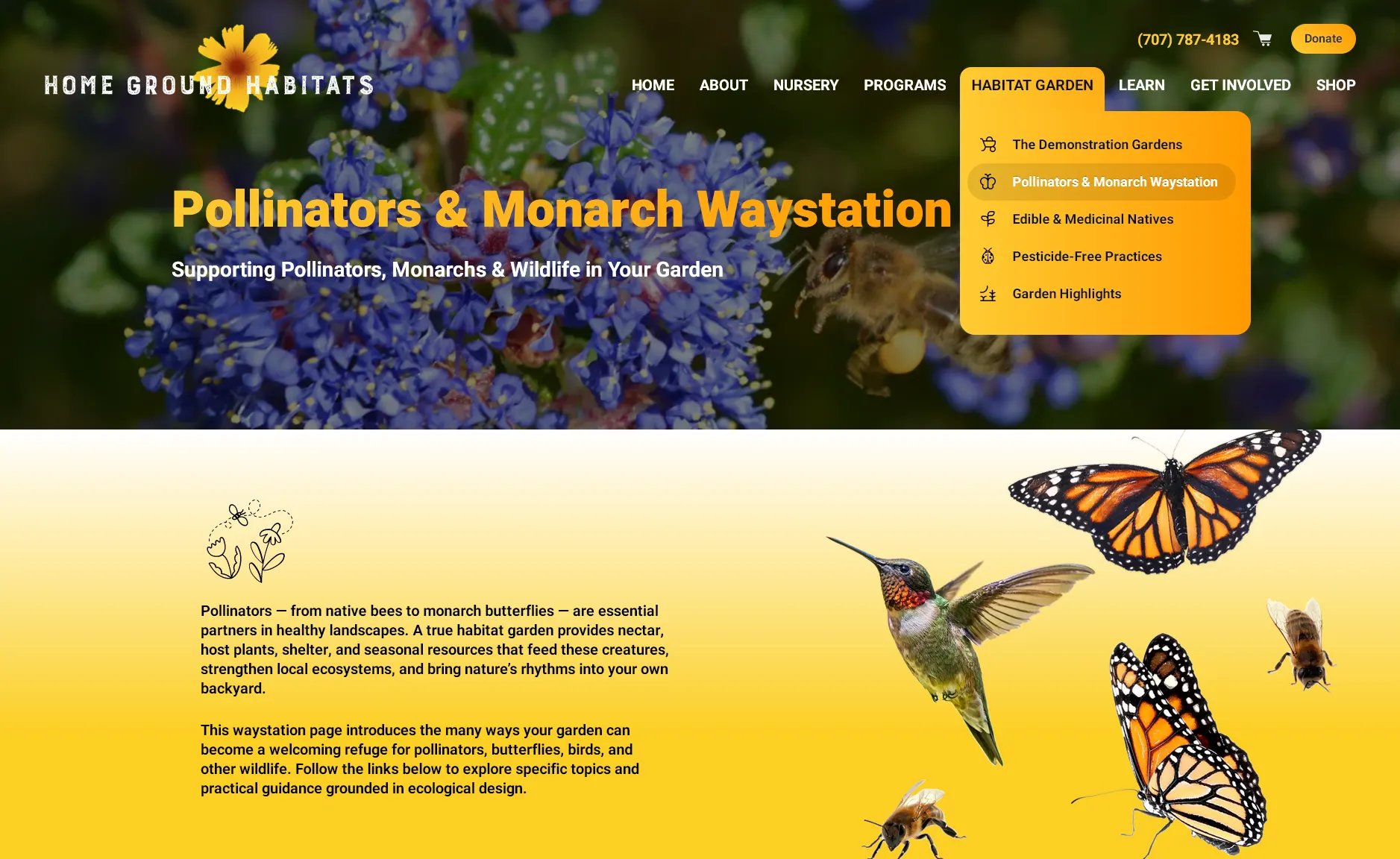
Habitat Garden page design for the Home Ground Habitats website.
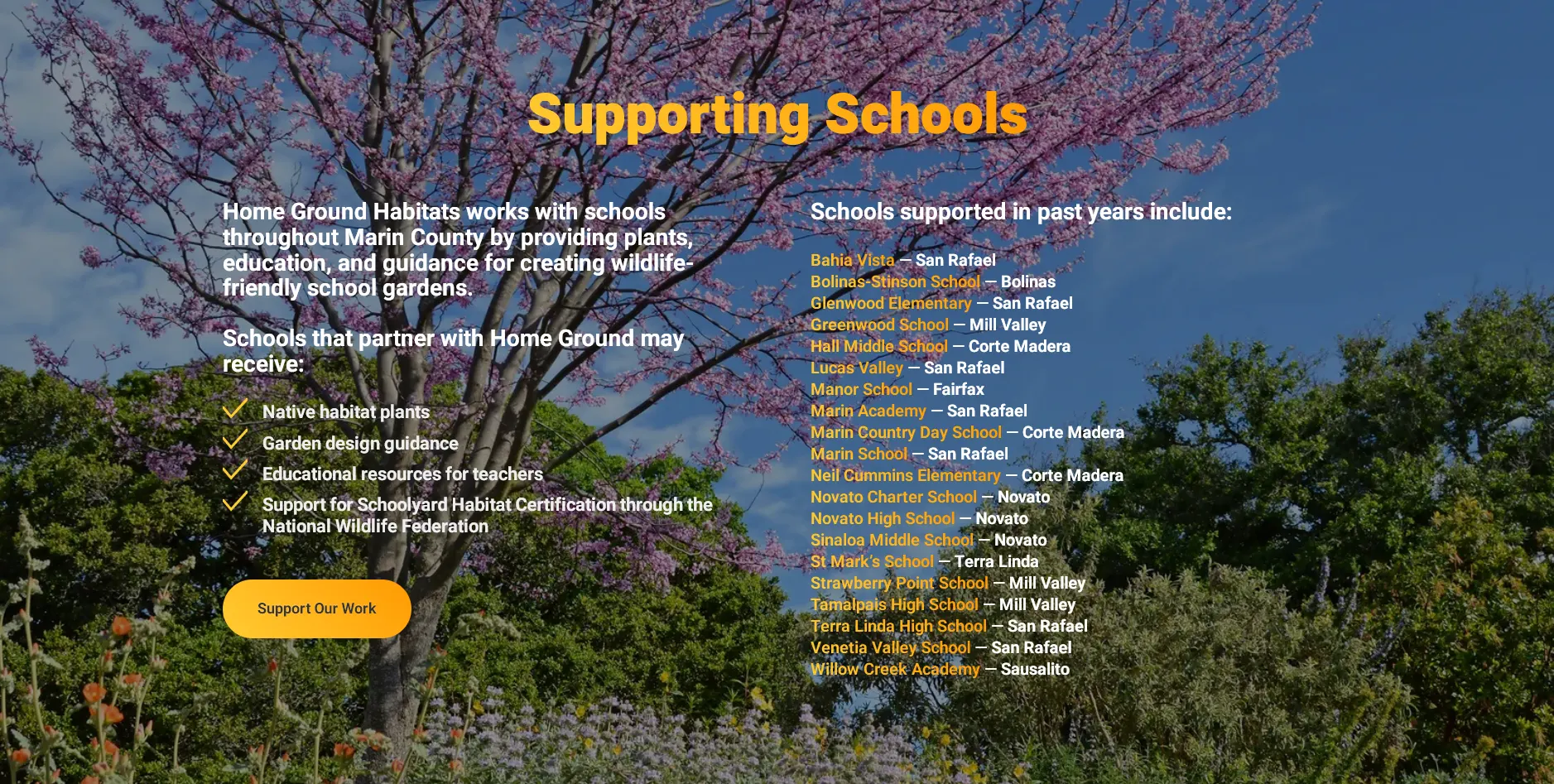
Supporting Schools plate.
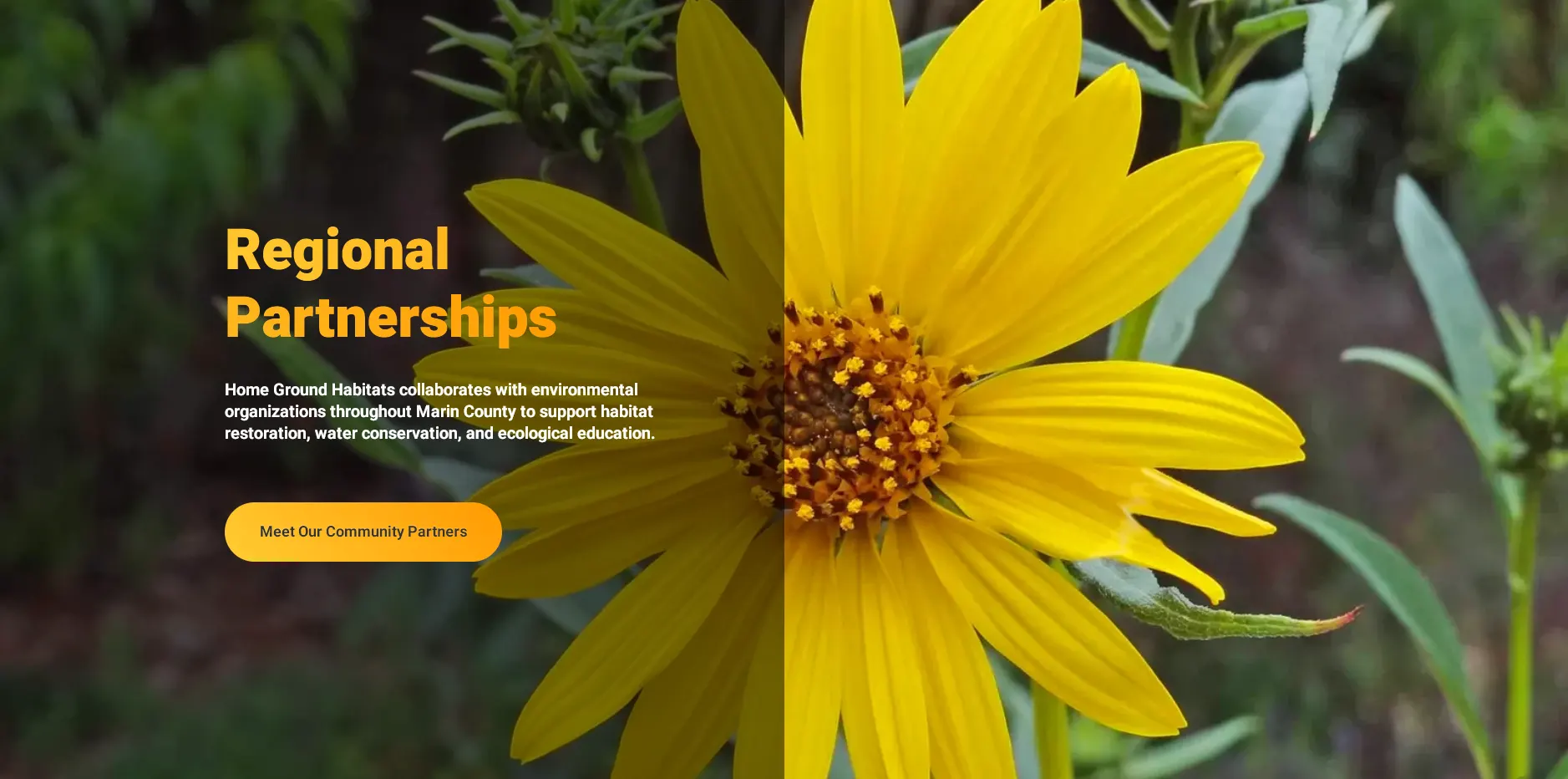
Partnerships plate.
From Prototype to Full Platform
By March 24, 2026, the final prototype had evolved into a highly sophisticated system.
The completed platform includes:
- Dozens of custom templates and structured content types
- Educational systems and resource libraries
- Workshop and event management
- Volunteer and donation workflows
- Square-integrated e-commerce functionality
- Interactive and seasonal content modules
- Mobile-optimized responsive design
- Performance-focused WordPress architecture
A key priority was reducing dependency on excessive plugins and heavy frameworks. The system was designed to be faster, more maintainable, and scalable over time.
Development began in mid-March, with a target launch of May 1.
The website officially launched on May 6, 2026.
Collaboration and Development
While much of the strategy, UX architecture, and design direction was developed independently, the final implementation was completed in collaboration with longtime Artenergy partner Alex Kudrikov, who led key parts of the WordPress development and custom system architecture.
This collaboration ensured that the platform achieved both high customization and technical efficiency, without sacrificing performance or maintainability.
Results and Impact
The redesigned Home Ground Habitats website now functions as a unified digital platform for education, engagement, and community participation.
Early post-launch indicators show:
- Improved navigation clarity across complex content areas
- Increased engagement with educational resources
- More intuitive pathways between learning, events, and participation
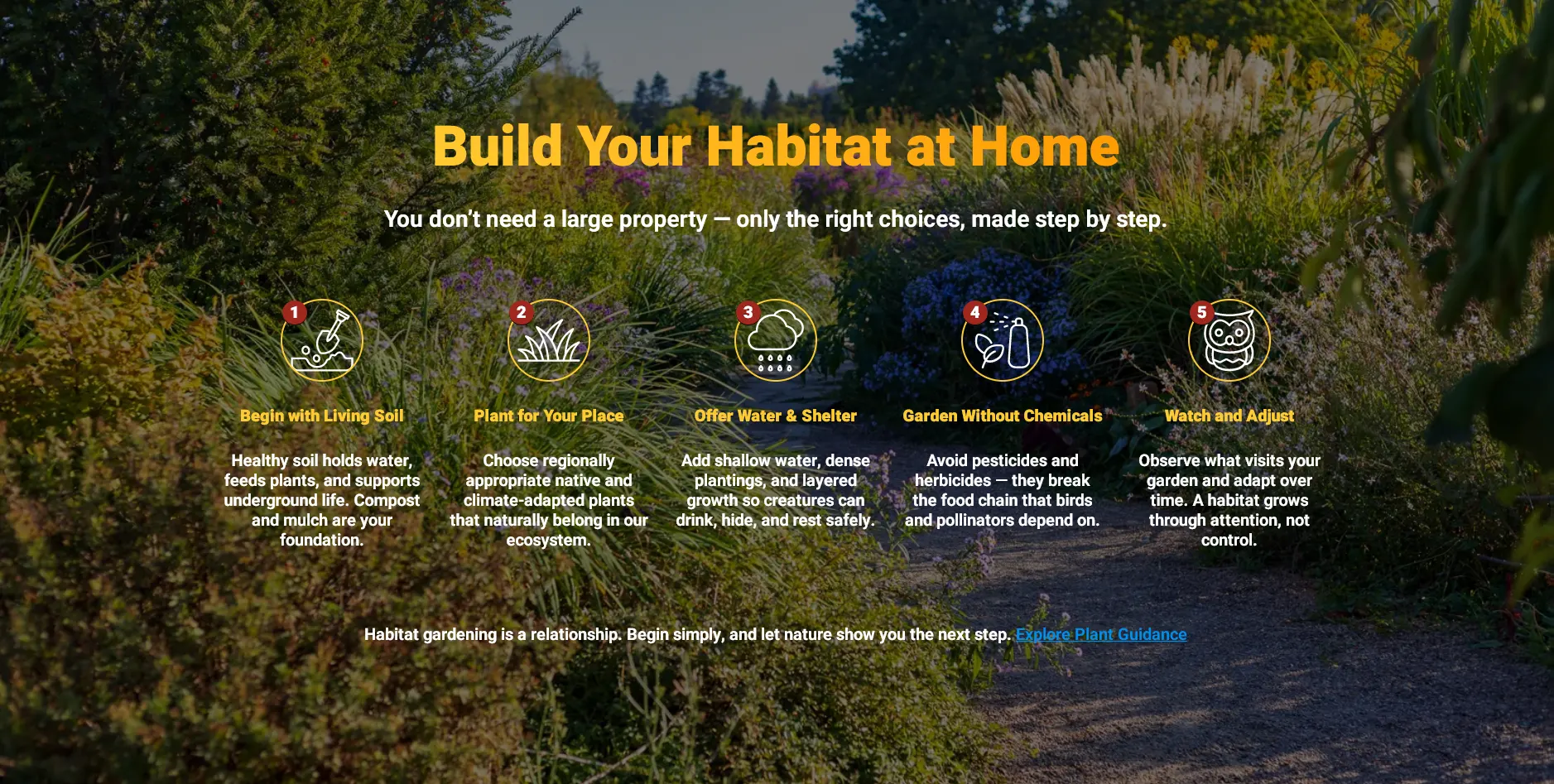
Build Your Habitat at Home plate, 5-steps from the Home Ground Habitats website.
The platform now accurately reflects the depth and quality of the organization’s work in habitat restoration and environmental education.
For a Marin County nonprofit serving a highly engaged local community, this transformation was especially important.
Explore the live site at Home Ground Habitats, a native plant nursery and educational center in Novato, Marin County.
Final Thoughts
Great websites are not built by arranging pages.
They are built by understanding systems, people, content, and purpose—then shaping those elements into a cohesive experience.
For Artenergy, this project in Kentfield and Novato reinforced a core principle:
A successful website is not just a digital presence.
It is an ecosystem.
And in this case, it became a digital habitat designed to grow, evolve, and support a mission over time.

Co-founder of Artenergy